City of Steamboat Springs launches fast-track planning for Stockbridge Campus housing project
Community engagement phase to commence in coming months


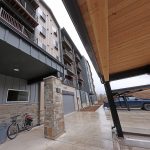
John F. Russell/Steamboat Pilot & Today
The city of Steamboat Springs is preparing to launch an intensive planning process this summer that will shape how the recently acquired Campbell property — now part of what officials are calling the “Stockbridge Campus” — could be developed to address local housing, childcare and/or senior service needs.
City Council received an update at its Tuesday meeting on the next phase of the project, which will center on creating an overall development plan for the more than six-acre campus near the Steamboat Springs Community Center and the Stockbridge Transit Center.
The site includes the two Campbell parcels the city closed on in April, two adjacent Colorado Department of Transportation parcels still under contract, and existing city facilities.
The planning effort is expected to produce three distinct development alternatives that will ultimately be distilled into one recommendation, explained Keith Meyer of Townscape Advisors, serving as the city owner’s representative on the project.
Meyer, a civil engineer with more than three decades of experience in both municipal and private-sector development, will work alongside Deputy City Manager Kelly Romero-Heaney, who is managing the project, and an internal city team spanning planning, finance, engineering, transit and legal staff.
An owner’s representative, explained Meyer, is an “extension” of the internal staff that helps keep the project moving forward on a compressed timeline and in line with council goals.
The city issued a request for proposals on May 12 for a planning consultant and development team and received 14 submissions. Officials expect to select a team by early summer, with a project kickoff anticipated in July or August.
From there, the process will focus heavily on public input, including what Romero-Heaney referred to as a “community-based design charrette.” That feedback will inform three potential development scenarios, each paired with a financial strategy, before being narrowed to a single recommended plan.
What matters in your community, delivered right to your inbox.
Sign up at SteamboatPilot.com/newsletters
“We’re asking the planning consultant to not just come up with ideas, but to tie those ideas to feasibility and funding,” Meyer said. “There will be a financial plan essentially tied to every alternative.”
While the city has already committed short-term rental tax revenue to acquire the land — a $4.275 million purchase completed April 27 — and secured roughly $1.6 million in congressionally directed spending for initial site work, officials acknowledged that building out the project will require a far more complex funding package.
“It could be some tax credits, it could be private financing and debt, it could be supplemented with (short-term rental) local dollars, grants — it could be a whole host of things that develop that capital stack, and that’ll be determined through this planning process,” said Meyer.
Exactly what role the city will play in development also remains undecided.
“The city could be anything from a landowner leasing the property to a third party, to taking on a more active development role,” Meyer said, clarifying that the city’s role is not predetermined but is another outcome of the decision-making process.
Romero-Heaney said collaboration with groups like the Yampa Valley Housing Authority will be key, particularly as the city explores funding options and housing expertise.
“We’re excited to have them at the table,” Romero-Heaney said, “but what direction this heads is yet to be seen.”
In addition to housing and childcare — long-standing priorities tied to workforce shortages — the project has also expanded to consider services for older adults. City officials have been in discussions with Serving Older Adults in Routt County, or SOAR, which is seeking additional space to meet growing demand for programs and services.
That expanding list of potential uses raised questions Tuesday about how competing needs will be balanced on the site, and who gets a seat at the table during planning.
The city plans to form an advisory committee to guide the process, with representatives from City Council, CDOT, Routt County, SOAR, the housing authority and the Yampa Valley Community Foundation. The committee will not have decision-making authority but will help vet alternatives and represent stakeholder interests.
Still, some council members and residents expressed concern about whether that group will capture the full range of community perspectives.
“I absolutely understand the desire to keep the advisory group small,” said Councilor Gail Garey. “But what I’m struggling with is how we make sure all the voices are represented.”
Public commenter Noreen Moore, who spoke on behalf of a loosely formed group advocating for the expansion of senior living opportunities in Steamboat Springs, echoed that concern, asking the city to include representation on the committee that reflects those perspectives.
Romero-Heaney said the advisory group is only one piece of a broader outreach strategy, and that city staff and consultants will conduct targeted engagement with various community groups throughout the process.
At the same time, council members debated who among them should serve on the committee, with councilors Michael Buccino, Amy Dickson, Bryan Swintek, John Agosta and Council President Steve Muntean expressing interest. Buccino and Swintek were ultimately chosen to represent the city.
The planning timeline is ambitious. City staff said they are working toward completing the overall development plan by the first quarter of 2027, with ongoing updates to council throughout the process.
In the near term, the city is continuing work to acquire the remaining CDOT-owned parcels, with a target closing date in September. Surveying and utility work is already underway on the site to prepare for planning.
The effort marks a transition point for a project that began last year with the city’s decision to use short-term rental tax revenue to “land bank” the Campbell property — a move officials described at the time as a rare opportunity to assemble a key piece of land near transit and existing community facilities.
Since then, the project has gained federal funding support and broadened in scope. Now, with the land largely secured, city leaders are turning to the more complex task of determining what the site can realistically support — and how to pay for it.






Support Local Journalism
Support Local Journalism
Readers around Steamboat and Routt County make the Steamboat Pilot & Today’s work possible. Your financial contribution supports our efforts to deliver quality, locally relevant journalism.
Now more than ever, your support is critical to help us keep our community informed about the evolving coronavirus pandemic and the impact it is having locally. Every contribution, however large or small, will make a difference.
Each donation will be used exclusively for the development and creation of increased news coverage.