Colorado Parks and Wildlife to direct $11 million toward protecting wildlife, public access on private property
The Colorado Wildlife Habitat Program offers funding to private landowners who want to protect wildlife habitat, recreational access or sell property to the state wildlife agency

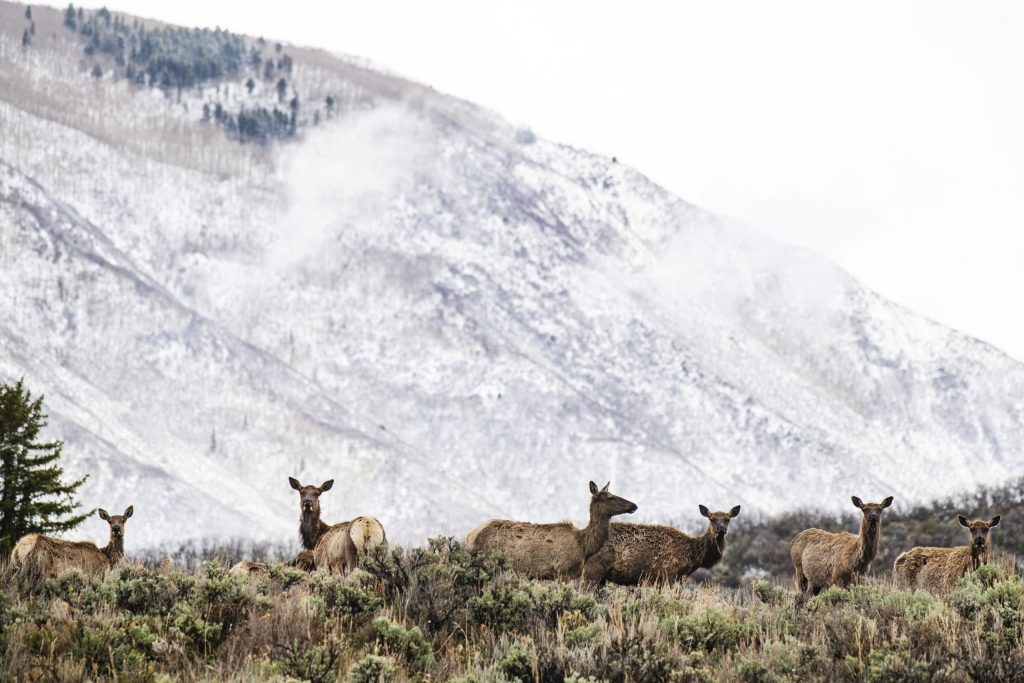
Kelsey Brunner/The Aspen Times archive
Colorado Parks and Wildlife has $11 million to help private landowners protect wildlife habitat or provide public access for recreation.
The state agency announced on Tuesday, June 16, that it is now accepting applications for the 2026 funding cycle of its Colorado Wildlife Habitat Program.
The program started 20 years ago and has invested over $213 million to protect almost 350,000 acres of wildlife habitat, nearly 200,000 acres of wildlife-related public access for hunting, fishing and wildlife viewing, and has added 393 miles of new stream frontage for anglers, according to a May presentation by Amanda Nims, who manages Parks and Wildlife’s habitat program.
“That is a remarkable return on investment for the people of Colorado,” said Brien Webster, Chair of Parks and Wildlife’s Habitat Stamp Committee. “This incredible engine for conservation is driven by the steadfast commitment of our hunting and angling communities.”
The Colorado Wildlife Habitat Program is funded by sales of the agency’s habitat stamp and through Great Outdoors Colorado lottery funds. While anyone can purchase a habitat stamp, it is a purchase requirement for anyone applying for or purchasing a hunting or fishing license in Colorado.
“Out of more than 635,000 habitat stamps sold in 2024, only 570 were purchased by non-consumptive users,” Webster said. “Financially, this means our hunters and anglers contributed over $7.7 million to this program that year alone, compared to less than $7,000 from non-licensed buyers.”
According to Nims, there are three types of acquisitions that the program funds. First is a fee title acquisition, in which Parks and Wildlife buys the property outright to turn the private land into a state wildlife area. Second is a conservation easement, in which the landowner continues to own and manage the property, but permanently restricts development. And third is a public access easement, where landowners allow members of the public to use their land — either perpetually or for a set amount of time — for hunting or fishing.
“Right now, our agricultural communities are facing immense challenges, and we are losing agricultural land at a staggering rate,” Webster said. “When we lose these working farms and ranches, we lose the river bottoms, the prime winter ranges and the historical water rights that our wildlife depend upon. The habitat stamp program directly addresses this by offering landowners a financially viable alternative to subdivision and development, by providing the capital to keep these landscapes intact.”
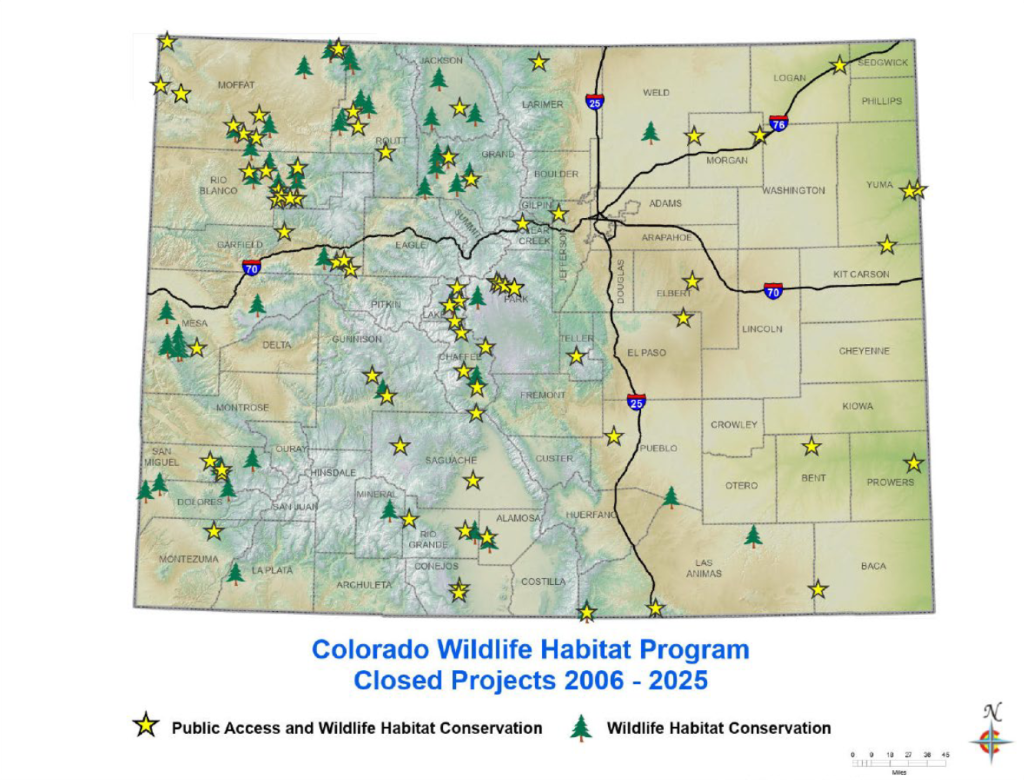
In 2025, Nims said the agency received proposals for eight fee title acquisitions, five conservation easements and three public access easements. All proposals are reviewed by the Habitat Stamp Committee, Parks and Wildlife regional staff and leadership and the attorney general’s staff before a recommendation is made to the commission for funding.
In May, the Parks and Wildlife Commission approved $10.8 million in funding for six new fee title acquisitions, three conservation easements and two public access easements for the 2025 cycle. In total, the acquisitions and easements will result in the protection of 20,000 acres of wildlife habitat and 4,100 acres of new lands for public access, Nims said.
“Our conservation partners and our landowners are bringing more than $58.1 million to closings to get these deals done,” she added. “This translates to our partners and landowners bringing 81% of the estimated total project value.”
Webster added that the investments “yield a critical dual dividend.”
“Ecologically, they protect water rights, keeping water in our streams and basins. They secure the superior winter ranges, migration corridors, leks, partition areas and other high priority habitats that our wildlife populations rely upon,” he said. “Culturally, they safeguard our sporting heritage. We know from the data that the No. 1 reason individuals give up hunting and fishing is the loss of access. When a family loses their place to hunt or fish, we don’t just lose a license sale; we lose a lifelong conservation advocate.”
According to the news release on the $11 million available in 2026, applications should describe how their proposal addresses one or more of several priorities and preferences listed by Parks and Wildlife.
Priorities include:
- Acquiring significant public access for hunting, fishing or wildlife viewing
- Protecting big game winter range and migration corridors
- Protecting habitat for species of concern (specifically Species of Greatest Conservation Need, identified in the State Wildlife Action Plan (SWAP))
- Protecting riparian areas and wetlands
- Landscape-scale parcels
- Parcels that provide connectivity to conserved lands
Preferences include:
- Properties that include lesser prairie chicken habitat
- Properties that exhibit biodiversity
- Properties that fall within CPW’s Habitat Conservation and Connectivity Plan
- Provides a public right-of-way across private land to provide public access to landlocked public land
- Working farms and ranches
- Properties that support wildlife crossings
Applications are available online at CPW.State.Co.Us/cwhp and must be submitted by 5 p.m. on Oct. 15.


Support Local Journalism
Support Local Journalism
Readers around Steamboat and Routt County make the Steamboat Pilot & Today’s work possible. Your financial contribution supports our efforts to deliver quality, locally relevant journalism.
Now more than ever, your support is critical to help us keep our community informed about the evolving coronavirus pandemic and the impact it is having locally. Every contribution, however large or small, will make a difference.
Each donation will be used exclusively for the development and creation of increased news coverage.